Residential rodent activity across Coastal and Central San Diego County predominantly involves two species: the roof rat (Rattus rattus) and the house mouse (Mus musculus). In older coastal communities like Ocean…
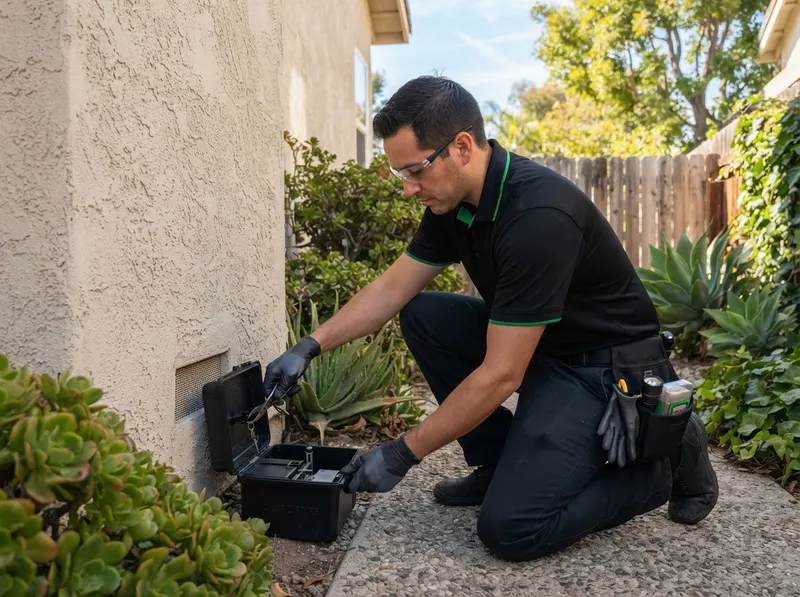
Residential rodent activity across Coastal and Central San Diego County predominantly involves two species: the roof rat (Rattus rattus) and the house mouse (Mus musculus). In older coastal communities like Ocean Beach, Point Loma, and Pacific Beach, mature palm canopies and dense bougainvillea provide continuous aerial pathways to Spanish clay tile roofs and open fascia boards. Inland neighborhoods, including Clairemont, Tierrasanta, and Mira Mesa, frequently experience seasonal indoor incursions along dry canyon rims as ambient temperatures drop. Effective management relies on physical mechanical exclusion rather than broadcast chemical baiting. Placing exterior second-generation anticoagulant rodenticides presents documented poisoning risks to local wildlife, such as hawks, owls, and household pets, regulated under the California Department of Pesticide Regulation. HomeSafe Pest Removal prioritizes non-toxic exclusion architecture that permanently stops rodent entry while safeguarding home environments.
Controlling rodents effectively requires distinguishing between suppression and permanent remediation. Quick-fix consumer traps address single foraging rodents but leave underlying structural vulnerabilities untouched. A single breeding pair of roof rats can produce 20 to 40 offspring annually, meaning unattended subfloor and attic voids rapidly become harborages. Professional intervention adheres to standard biological remediation protocols established by the Centers for Disease Control and Prevention. Technicians isolate active nesting corridors, establish interior capture lines away from living areas, and systematically seal exterior gaps greater than six millimeters. Common entry points include unshielded foundation air vents, plumbing chases, junction boxes, and unsealed weep screeds along stucco framing common throughout San Diego architecture.
Sanitation and biohazard mitigation represent the secondary phase of definitive rodent management. Rodent urine and feces release airborne particulate matter and allergens, while nesting substrate damages attic insulation and air delivery ducts. Complete restoration involves the physical extraction of contaminated fiberglass or cellulose, followed by broad-spectrum biocidal treatment adhering to U.S. Environmental Protection Agency antimicrobial protocols. For structural safety, all wire mesh used in crawlspaces and vent blocks matches ASTM International wire specifications to prevent gnawing. HomeSafe Pest Removal does not force multi-year contracts, focusing instead on definitive mechanical repair, localized trapping cycles, and single-service attic restoration options verified on-site.
Structural clearance requires specific engineering checks based on home age and architectural layout. In historic Craftsman residences in North Park and South Park, exterior shiplap and vented basements require customized metal flashing, whereas Mid-Century flat roofs in Hillcrest and multi-story hillside properties in La Jolla demand exterior rope-access inspections to identify gaps along cantilevered decking. Technicians review local municipal housing requirements detailed by the City of San Diego Development Services Department to ensure all vent screening complies with passive attic ventilation ratios while arresting exterior rodent access. Every phase preserves household air quality and family comfort without broadcast chemical applications. Property owners can arrange an evaluation or text structural photos for an assessment by contacting (858) 206-2014.
Every job gets a firm, written price after a free on-site visit.
For standards, safe disposal, and service guidance on pest control services in San Diego, CA, useful references include U.S. EPA, ENERGY STAR, U.S. Dept. of Energy, Consumer.gov, U.S. Census Bureau, and Google Maps. General consumer and small-business resources are available from USA.gov, Better Business Bureau, FTC Consumer Advice, U.S. Small Business Administration, and Ready.gov.
Tell us about your rodent control job in San Diego and we'll send a clear, written quote, usually the same day.
 HomeSafe Pest Removal